The necklace is what draws the person to the gift. What I want to avoid giving the consumer is the knot. Loose chains will tumble over when a gift bag swings back and forth while en route. In addition to helping, you show off your artistry, selecting packaging materials based upon their form will assist you in providing the item as the first thing seen by the customer, not a project they have to complete themselves.
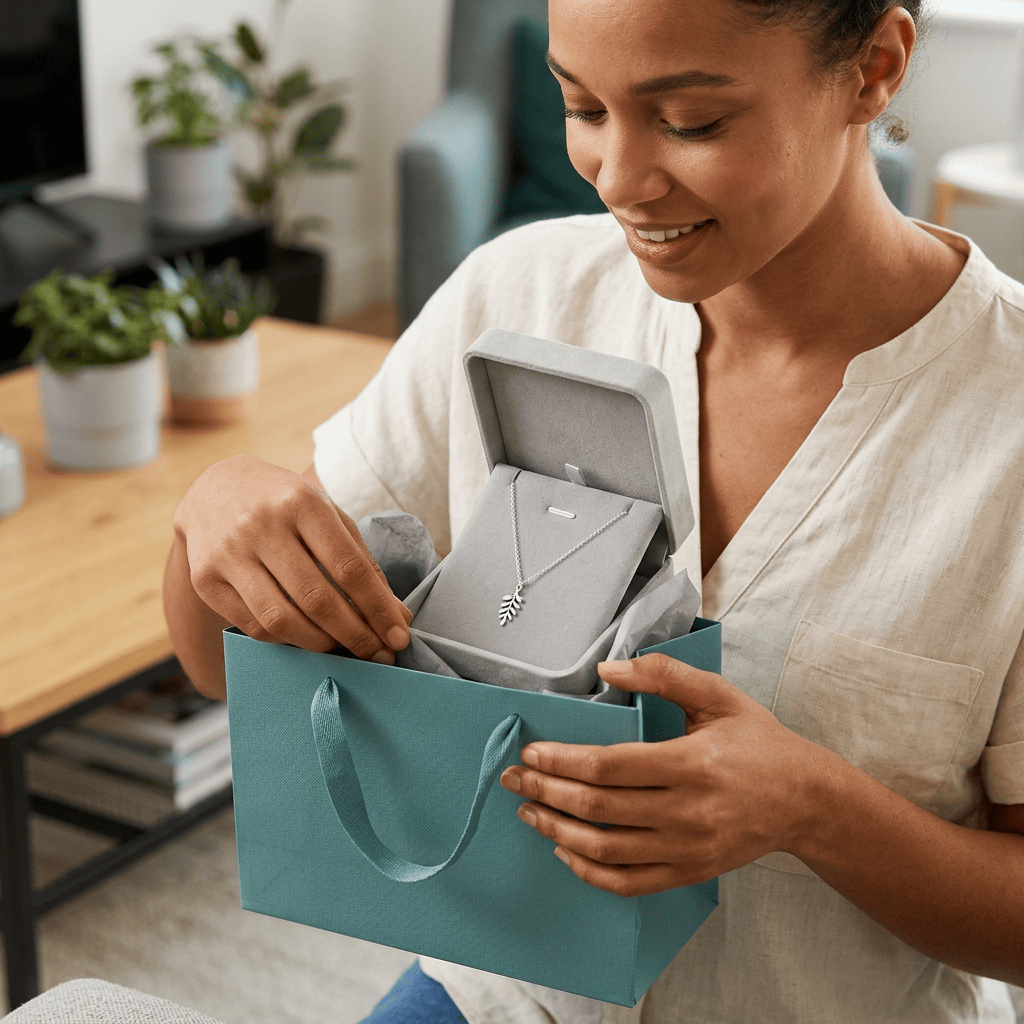
For a craft stand, decide on your package-ability strategy prior to customers’ arrival. Do some experimentation (and testing) with your longest chain and/or largest charm, as these pieces will require more space than the others. A box that is designed to fit a small heart charm might rub up against a large stone. Select several different sized boxes so you can select a size to best fit each piece rather than forcing all of your products into one style.
In many instances, a necklace card will allow the chain to remain stationary by allowing the chain to pass through slots specifically designed for the product. Pass the chain through the slots without tightening it. Place the charm on a padded material. Make sure there aren’t any sharp edges on the cardboard; it could potentially scratch or damage a fine link. If the cardboard bends too far or the chain falls out of the slot, do not use tape on the necklace to keep it in place; simply find another necklace card that holds the chain better.
If you cannot find an appropriate-sized necklace card for your particular product, you can try a jewelry box with an insert designed to hold that type of product. Be sure to test how well the lid closes around the charm, because it should not have to be pressed onto the stone. There should be enough space inside the lid for the chain away from both the hinge and lip of the lid. Test your sample by opening it and then walking it across a room to ensure that the product did not move. While this will provide you with evidence of potential movement issues for local deliveries, it is no guarantee that items will arrive at their destination safely via mail.
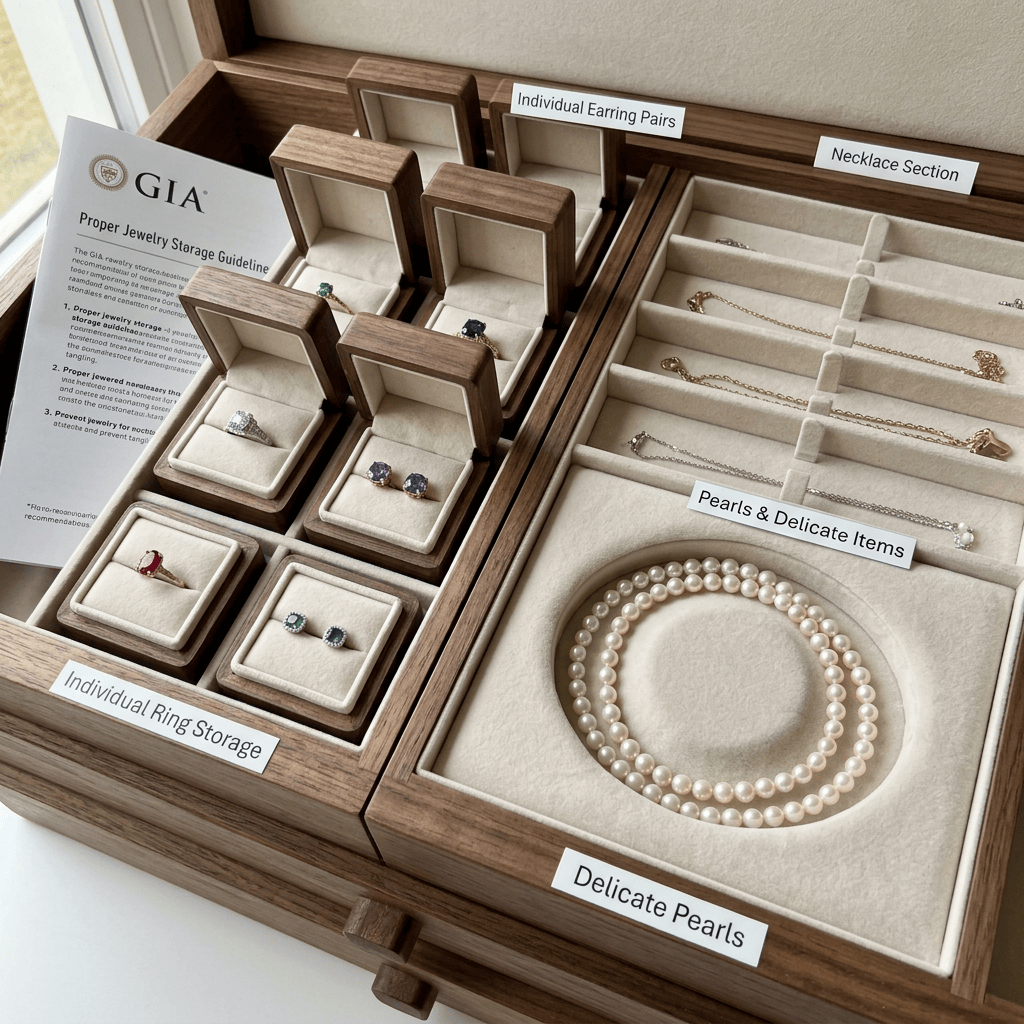
Although they are part of a matching set, store rings and earrings separately from necklaces. The Gemological Institute of America recommends storing individual gemstones in separate locations, which helps prevent them from coming into contact and damaging softer stones. Store each ring and earring individually inside a gift box or use a small individual case for each. Delicate pieces such as pearls may need special care; therefore, consult with the manufacturer about what type of liner and storage system are recommended.
While selling gifts at a craft stand, let the consumer view the necklace before you seal it in its container. It allows consumers an opportunity to review the color and inquire as to how they would go about removing it from its holder. Include instructions next to the gift case and consider offering a plain outer bag for any gifts intended to remain unopened.
Store one fully prepared example of each necklace design behind your display area. This way, if you experience a busy period at your craft stand, you can train anyone assisting you how to properly prepare each product for shipping. As you switch products being sold, verify that each still fits its designated holder. Then the consumer can focus on deciding who receives the gift rather than trying to get it untangled.

