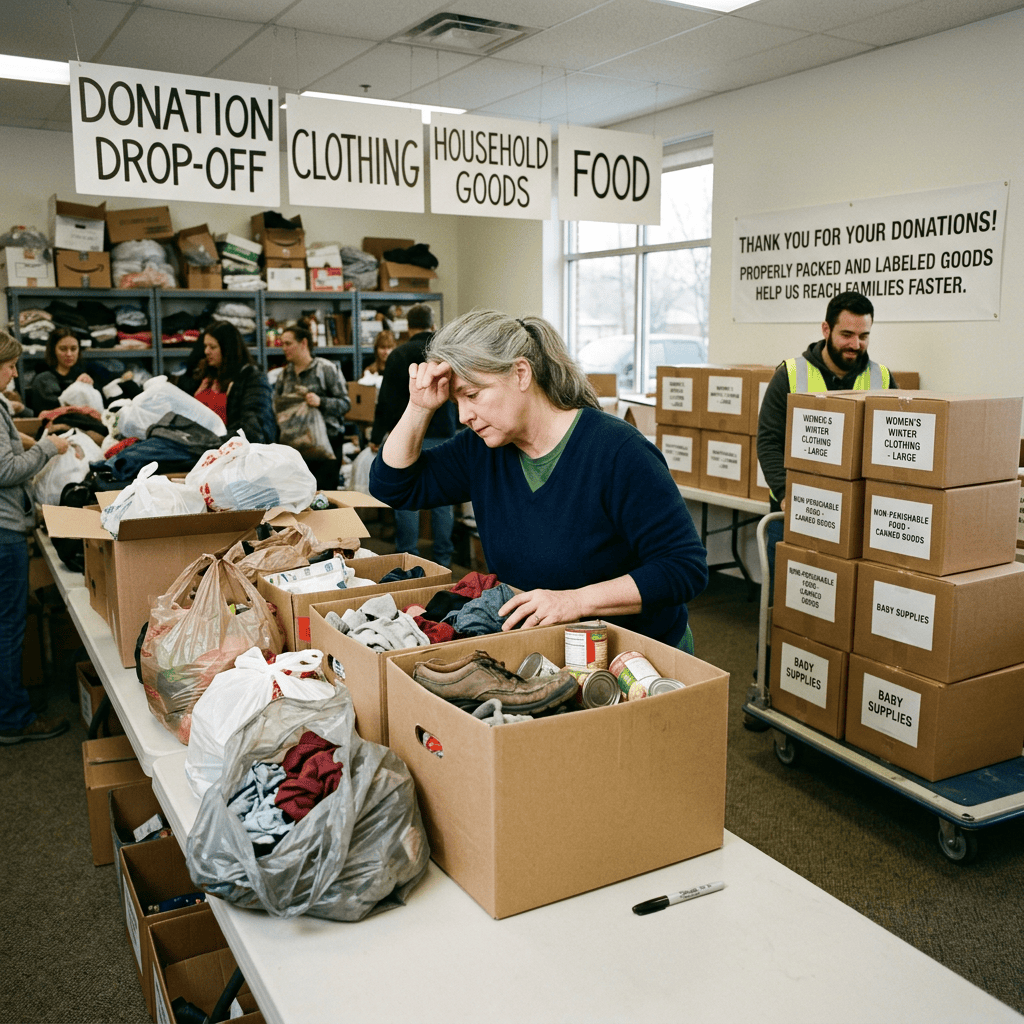
While an abundance of donations may visually represent a successful donation drive, these donations may cause many hours of labor for those accepting them. Sorting through mixed items, poorly packed and labeled bags and boxes, or boxes without labels can greatly impede the efforts of those coming to lend a hand. With some preparation, the proper packaging supplies can convert an otherwise generous contribution into valuable assistance that can easily be distributed to families in need.
Contact the charity prior to your donation drive and determine what they can accept. The local food bank may require sealed packaged foods with legible date codes; whereas, a homeless shelter may need new socks, soaps, etc. Identifying accepted items ahead of time eliminates the possibility of unnecessary items being included in your donation load. Also, identifying accepted items provides insight regarding the types of boxes, bags, labels, and tape required for packaging the accepted items.
Organize areas designated for specific types of donations. For example, books, clothing, and personal care items should be organized into separate areas. Utilizing large signs helps guide donors into the appropriate areas. Organizing donations as they arrive allows volunteers to sort through the donations at the point of receipt versus having to review all of the donations upon arrival.
Utilization of adequate packaging materials is necessary due to the fact that donations may be handled multiple times until they reach their final destination. Small, sturdy containers should be used to pack books and canned goods to allow volunteers to handle them without straining themselves. Sealed bags containing clothing protect against moisture and debris. Separate clear bags with similar items such as toys with loose parts are best stored together along with a brief description of each item contained within. Items made of glass need wrapping materials and a sturdy container that does not bend or flex.
The labeling of the contents of each box should be clearly visible from several feet away. Labeling should occur on both sides of the label so that if the top is obscured during stacking, the contents can still be identified. Additionally, notes providing additional information about each type of item may be helpful. Examples would be “Children’s Coats”, “Bath Items” or “Books for Readers”. Marking a box as either heavy or containing breakable items provides additional guidance to volunteers.

Maintain cleanliness and safety of your donation load by inspecting it prior to delivery. Remove any damaged or spoiled items including wet clothing, opened food, broken toys and/or other unacceptable items determined by the charity. Securely close each box using tape to prevent its contents from spilling out. However, avoid making it difficult to open. Before leaving with each donation, attempt to lift each box. If one individual is unable to safely lift it, consider splitting the contents among two boxes.
Proper packaging demonstrates a respect for both the donor’s generosity and the individuals responsible for managing the contents. Proper packaging saves time associated with sorting through donations, reduces potential damage to the donated items and allows volunteers to remain focused on assisting others. While packaging materials appear insignificant when compared to conducting a donation drive, properly selected and utilized packaging materials – including strong boxes, readable labels, and simple organization – will enable each act of kindness to be extended further than anticipated.

