How Custom Bags and Films Improve sales 

The way people package their products is a huge part of having good products. You need this packaging to look good, and to perform well. It’s also necessary for protecting items inside as the user-friendly options for customers to open up, and the eco-friendly utilization through this packaging life cycle is optimized. 

Packaging does need to look good for presentation, especially on shelves. 

However, you also need the packaging to be good, and cost-effective. Accomplish all of the key objectives, and also without breaking your bank or messing with profits. The correct balancing between effectiveness and affordability has the capacity to truly maximize those profits. 

Custom Poly Bags and Poly films 

There are so many different types of packaging that come with a variety of purposes. 

If you need a simple, bulk product, then we have you covered.  We have all of the materials you can imagine.

But let’s talk about custom bags and polymer types of films. These are used for both external and internal product presentation. These custom films and bags make a huge difference for your customers. 

We specialize in various packaging solutions. Whether it’s equipment, or materials, and specialized custom films and bags for high-spec industrial types including foods, pharmaceuticals, beverages, electronic items, and a whole lot more! 

The Best solutions for packaging 

The cool thing about these customized bags and films is that with this, we can enhance the branding, create a point of purchase or PoP sale, and also provides product protection that’s advantageous to various customized designs, and is very much worth all of your investment. 

Here, we’ll go over some of the different ways to use custom films and bags from us. 

Specialty Food bas and Films 

Custom bags and films provide better protection for these food products. It keeps the products fresh during storage, distribution, shipping, and after the purchase. You’ll get a more practical and convenient way to enjoy these products as well. 

Shrink Banding 

Shrink banding is good for health items, medical supplies, and food products that are bottled. They offer tamper-proof solutions and a seal that shows that it’s intact. Cost-effective, and super easy for you to apply. You just have to ensure that the shrink bands get fitted to these bottles.  You can also get into customized instructions, branding, and various information that warns customers to improve safety and bolster the customer experience overall. 

Vacuum-sealed Packaging 

Vacuum sealing items is something commonly done for cheeses, meats, frozen items, and all kinds of foods and products.  You freeze them and then vacuum seal them in some cases. Or just vacuum seal these for storage, and to prevent any freezer burn. 

The form fitting types of packaging for this does require specialized branding, so you’ll want to make sure that you have this. 

You want to do this with other packaging.

Carded Packaging 

This is a packaging that’s bubble formed types of plastic and offers a retail presentation that’s super effective.  It’s a way for you to differentiate these products in a package that’s durable. It provides a longer shelf life that’s cost effective with lighter weights and lowered costs of transportation. It prevents drips, tampering, food leakage, battery protection, and is great for many products. 

Tubing and setting 

This type of product is great for anything that’s cylindrical and needs that protection. It can package, store, and ship items.  It does require various product specifications and requires budgets. 

There are many different packaging experiences. Look at them today to see the unique type of packaging that you can create too. 

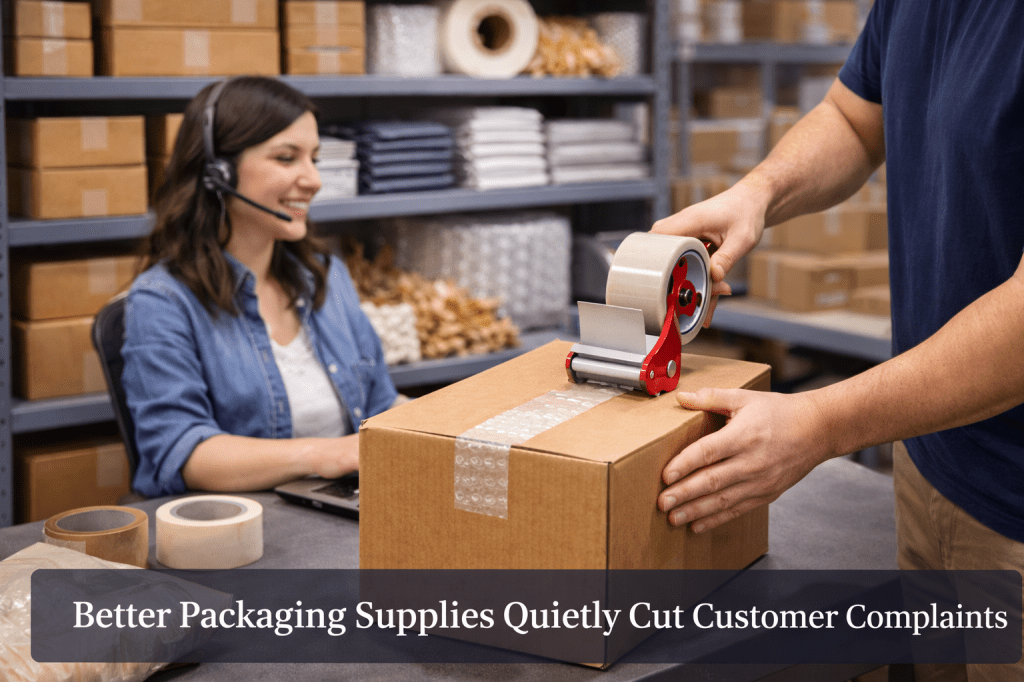
How Better Packaging Supplies Quietly Cut Customer Complaints

Every business owner knows the sting of opening their inbox and seeing yet another message that starts with, “My order arrived damaged…” It’s frustrating, and it always seems to come at the busiest times. Most people assume these problems happen because of rough shipping or careless drivers, and yes, sometimes that’s true. But far more often than anyone wants to admit, the real issue started long before the box ever left your building. It started with the packaging supplies you used without thinking twice.

When you walk through your shipping area, everything might look normal. Boxes are stacked, tape rolls are nearby, and filler materials sit in bins or bags. But if those supplies are weak, mismatched, or used in ways they were never meant to be used, then the problems have already begun. A soft box that bows when weight is added may survive your warehouse but not a truck. Tape that peels at the corners might look sealed when it leaves your hands but won’t hold when the weather changes or the box shifts. Filler that doesn’t actually keep items in place will settle during transport, letting products slide around like marbles in a jar.

Most customers don’t explain these details. They only see the result. They open a box and find something dented, cracked, or tossed inside a sloppy interior. Even if the item still works, their trust takes a hit. They start wondering whether your business is careful or careless. And once someone starts questioning your care, repeat orders become harder to earn.

Now imagine a better setup. Not fancy. Not expensive. Just intentional.

Your shelves hold boxes that actually match the kinds of items you ship most often. They’re strong enough to handle stacking, shifting, and pressure from all sides. You keep padding that fits your products instead of leftover scraps. Your tape seals clean on the first try and stays sealed during the entire journey. When someone on your team packs an order, everything fits almost naturally. There’s no forcing, no stuffing, no doubling up tape, no crossing your fingers.

The customer on the other end opens this kind of package and feels something completely different. They feel confidence. They feel calm. They feel like you respect them enough to ship their order the right way. Most people will never say, “Wow, great box!” but they absolutely notice when something feels safe and cared for. That moment right there—the quiet “this looks good”—is what cuts customer complaints long before they ever happen.

The surprising thing is how much this reduces stress inside your own business. Your support team isn’t spending their time sending replacement items or writing apology messages. Your shipping staff isn’t frustrated by flimsy supplies that slow them down. You waste less money on returns, refunds, and replacing damaged goods. You even save on shipping because the right box size means you’re not paying to send empty space across the country.

There’s another layer here that smart business owners appreciate: using packaging made from responsibly sourced or recycled materials. This isn’t about being loud or political. It’s simply about being wise. When you choose materials that are strong, efficient, and responsible, you protect both your customers and your resources at the same time.

Customer complaints don’t disappear because you begged the carrier to be gentle. They disappear because you packed every order with supplies that are built to survive the journey. When the right packaging becomes part of your daily routine, problems shrink, stress goes down, and customers feel the difference without ever needing to say a word.

What Foil Stamping Is 

Foil stamping is something that utilizes heat, metal dies, along with pressure, in order to offer a chance to make foil films This is used in a ton of applications, including: 

  • Stationary and notepads 
  • Labels 
  • Cards 
  • Seals 
  • Packaging for products 
  • Postcards 
  • Pocket folders 
  • Certificates 

This is a modern kind of technique that was first found during the late 19th century, and these days, it creates a very interesting, visualized interest, and also offers a better, more perceived view of the products that are there. The foil is very thin, and it’s coated with different colors, applied directly through processes that are called hot stamping

The pigment is then placed directly onto the clear film, which is then used as a carrier, and then transfers this color directly onto the product at hand. There is another layer of this, which is then consisted of the different sediments, and then, on the third layer, there is an adhesive that’s heat-activated in order to stick this directly onto the product. 

This works well on a lot of different types of paper stocks, and it works as well for finishes that are smoothed, and even too, when compared to textured, or very lined kinds of materials too. 

The Types of Stamping 

This is all ultimately based on your substrate and the finish you’re going for. 

There are different hot stamping techniques, and we’ve listed a few of them below: 

  • Vertical foil: this stamps the foil designs onto cylinders, and also flat substrates 
  • Flat foil: this is simple, where you use magnesium, or copper, and the metal stamp then transfers directly onto this substrate, offering a foil design that definitely raises directly onto the surface 
  • Sculped which uses a brass die in order to offer a raised image that’s defined, and curved 
  • Peripheral foil: the heat then transfers applied directly towards the outer perimeter of your product directly 

Normally, gold and silver is the best way to offer a luxurious color to this as well. 

The different finishes, including matte, glossy, holographic, and metallic or even wood grains can be used. 

The Benefits 

The benefits is definitely obvious whenever you’re trying to really make a design sign. 

Foils that are light or metallic are great for anything that’s dark, as it makes it very easy for you to read 

You also can get a range of different finishes via hot stamping, and it lets you experiment as well with the packaging and branding. 

The different striking elements that are possible through the use of this technique do stand out too amongst a giant sea of different products that are competitors. 

There are other kind of options to stamp too, and printing finish options, and that’s worth checking out. 

Foil stamping is one that a lot of people are looking to use, as it’s one that allows you to bring some new, amazing life to the packaging that’s there. whether you wnat to enhance the logo or the artwork on something, foil stamping makes your products look like they’re worth even more and are something with a higher value than what’s perceived. 

The process is all done with a machine, where the design gets etched, heated up, and then has a high pressure stamp to create a thin layer directly onto the substrate. 

This application is one that’s a very core amount, and it offers the correct result that’s there. 

You can make this out of copper, brass or magnesium. Although expensive, it’s worth it, especially if you use it a lot too. 

How Laminate Topcoat is Different from Varnish Topcoat? Which one is best for Custom Product Labels?

When a company plans custom packaging, it involves everything that you design and decide. So are the labels for your packing of the products. It also needs complete planning for customized products’ labeling. However, when you go to the manufacturer of the labels, they will ask you, either you want laminate or topcoat labeling. Usually, unknown people do not know about the difference. They assume that both labels are the same products. However, they have some different features and usage styles. Therefore, for your type of packaging, first, you need to know the differences between the laminate and topcoat labels. Then, the final decision is which to choose for your packing and products. Therefore, the article defines the thorough differences and decisions, you need to take for your product’s labeling.

What is the Role of Label Topcoat?

Labels of a product’s packaging have multiple layers. The label material is usually as a face stock. This is the layer of a label on which the designer can design and print the images, texts, and graphics. The layer has a clear impact on the appearance of the packaging. Moreover, it makes the performance of the label more effective. Therefore, it has different layers to show care and make the appearance unique. These layers will make them look beautiful and enhance the lifespan of the product and packaging.

What is Topcoat Label?

Well, as you know now that label has multiple layers. Thus, the topcoat is the outermost layer of the label. The purpose of the topcoat label is to add extra care and protection elements to the packaging. Moreover, it prevents any damage and scratches to the product. The fragile content is safe in the topcoat labels. Moreover, it prevents air pollution, heat, and fluctuation in the weather to touch the item and damage it. Therefore, for sensitive and soft products, a company should use topcoat packaging. Moreover, it gives the finest finishing to the labels and the final layer. The appearance becomes attractive and elegant when you use topcoat labels.

What is Varnish Topcoat?

Well, the topcoat can be made of two main ingredients. One is varnish and the second is laminate. The labels that have used varnish are varnish topcoat. It has a thin layer or coating of silicon liquid. It is sealed over the top of the printed layer of a label. The primary purpose of these topcoats is indoor use labels. When it comes to resistance to moisture, they provide minimal protection and less safe for fragile items. They can protect the item 100% against scuffing and smudging.

Moreover, varnish topcoats are available in gloss, matte, and satin finishing. However, they are appropriate for so many products like cosmetics, shampoos, and food items.

What is Laminate Topcoat?

A top layer that has made of a thin layer usually polyester is a laminate topcoat. It provides the impact of plastic and will show flexible protection. Moreover, the content is safe from moisture, heat, rain, and other damaging impacts. Well, plastic has the ability to resist severe and some serious threats of damage. Therefore, the fragile items are safe from UV Rays, oil, moisture, and other elements that can damage. When it comes to laminate topping, it has glossy finishing and matte finishing. Both are available and appropriate for your products. The final decision depends on your choice and the products’ requirements.

Now, you will have to make a decision about your products and packaging. Then, it depends on the fragility and nature of the commodity. Some items do not get affected by the heat and moisture; thus, you can use a varnish topcoat. Otherwise, you will have to choose laminate and plastic layer.

Dos and Don’ts of a Good Unboxing experience 

If you’re someone who wants to engage with customers on the products, you can build this through unboxing experiences. This is a great way to help create a wonderful impact and build a really great experience for the customers you have. How do you make it unforgettable though? What should you avoid? Here are a few things that you should do, and things you shouldn’t do, to create a peak unboxing experience you and your customers will love. 

What to do 

First, you want to use packaging that’s branded. After all, you’re getting customers to learn about you. You can include the brand and other aspects of this on all of the materials for packaging. Logos added to packaging are cheap, and the cool thing about it is that you can have the brand be there through the process of unboxing, and it can be done in a way that it’s not too much for customers either. 

The second thing is to get creative with the packaging. You want to make sure that you get a little different with it. Custom box inserts, paper tissue that’s branded, or recycled paper are good. You should also make sure that tape is also utilized too, as you’re already sealing this, and this does ensure a better, branded experience. 

It’s important though to make sure that you choose materials that do align with the identity of the brand, and the environmental ideas of this. This is something that does make it better for you, and you should get creative, but don’t make the unboxing experience bad. 

Third thing is you want to make it more than just good packaging. Thank-you notes and letters, free samples, coupon codes, or even free returning is a good option. This encourages customers to share, and they see from this, that you do give a darn about the experience that you’re trying to convey. 

What NOT To do 

Let’s talk about what you should not do with this. The first is you don’t want to get too crazy with the packaging. But wait, aren’t you supposed to use branded packaging? Of course, but you want something that’s not super complex, or something that comes in packaging that’s too complex for you to open up. 

Keep it simple, keep it aesthetic, and keep it easy for people to access. This makes the unboxing experience fun, but it also shows that you’re a sustainable company, as you’re trying to keep the carbon footprint that you have as low as possible. 

Second thing is get rid of the foam peanuts. Foam peanuts used to be the in thing for packaging, and it was something that you may want to use. But here’s the problem:” they are far from eco friendly, are annoying for cleaning, are really not that good, and let’s face it, they cling to just about everything. Get an alternative to the void filler for your own needs 

Finally, don’t waste the space. You should make sure that all of the space is utilized. Big, empty boxes are the last thing that you want, and people hate that stuff, so keep the space used, and try to get as much usage of this as possible. 

Unboxing is super fun, and it’s a great experience for many people. For a lot of them, the right unboxing experience does matter, so you’ll definitely want to, with this as well, choose items that benefit you, and be mindful of the packaging that you have, as it can make the experience that much better for you. 

How and Where to Determine the Price and Quantity of Using Strapping Components

Users can be an existing industry seeking wrapping supplies for their goods. Alternatively, it’s possible that you’re completely fresh to goods packaging but are also looking for the right supplies for their packaging department. Users have come to the decision to employ a strapping component, commonly referred to as binding, after carefully weighing their alternatives.

However, users are unsure of how the amount of strapping that might need their existing packing needs. Bulk purchases are an option, although simply don’t need to make an excessive number of them. Users are attempting to calculate the precise quantity of material strapping needed for their present packaging tasks as well as the pricing. Furthermore, they are unsure of exactly to determine the quantity of the strapping supplies you’ll need.

So do not be sorry. It is indeed a typical issue for so many businesses. We had learned whatever there is to know about belting material throughout Commercial Packaging’s several decades within a manufacturing business. And we can figure out how much strapping is required for any quantity packing task. Well, how to calculate how much belting buyers require for each packaging material is covered throughout this tutorial. Users will be able to purchase the appropriate quantity of belting materials for specific packaging needs using the data supplied here. Additionally, users would be capable of figuring out how much strapping they need and how much it will charge.

What to do to find the Quantity of Strapping Materials Users Need

There are really some variables to consider when determining what further strapping materials users need and the overall package. Exactly the sort of strapping needed for particular goods, the thickness of the strapping reader selected, as well as the amount of strapped needed to do the task, are among these factors.

Determine the Strapping Materials Users Need

Determine which really strapping seems to be the best kind of materials for particular packing requirements first. Throughout practice, there seem to be 3 major types of using strapping substances. Such include metal strapping, and nylon strapping, including strapping made of polypropylene. Users will utilize polyethylene strapping but rather cotton strapping even if you need wrapping really hefty items like industrial machinery and building supplies.

Polyethylene is typically used during strapping devices. Polyester, on the other hand, seems to be more durable but is often applied overhand using a manual strapper. It must be mentioned as strapping with prints is indeed an option. Product details, warnings, as well as other text, can indeed be imprinted upon strapping to trademark it. In this regard, laminated strapping might serve as both a type of wrapping that provides protection.

Measure the length of the straps you need. The next step is to decide whether users will strap this package. It is often advised by using either a 3by8″ band. With 12,900′ each coil, the product offers good value for the money and therefore is suitable for the majority of purposes. Select which direction users would really like to strap each container by using measures from each package, then add some of these numbers to get the lengths from every strap.

Through the necessary length of strapping each box, split your overall coil distance. Consider that you will be utilizing two straps again for the container’s length plus two straps because of its breadth. Each box measures 9″ broad as well as 5″ strong. Which would create the overall 28″; add just a little more leeway to get the boxes 30″. Calculate 12,900′ by 30″; this equals 430 containers. You may now determine how much strapping would be needed to secure the quantity of containers users might need to protect.

Well how Determine Ones Strapping Substance’s Cost

Finally, figure out how much strapping you’ll need to finish your packing job using the data from above. Consider the scenario where 8,600 containers specified in the paragraph above needed to be packaged. Users will also need Twenty loops or strapping properly to assemble 430 of their boxes, which will take 12,900′ with 3/8″ belting. Then that you understand how many strapping you’ll require or what it will expenditure, users can estimate the expense.

Of the kind that Strapping Style Is Suitable For The Company?

Individuals seem to possess all the knowledge necessary to determine your desired strapping quantity and exactly costly this would charge business thanks to the knowledge inside this post. What sort of packaging strapping materials seems best for particular items, though?

Let’s say you want to know which strapping materials would work the best for your packing requirements. The Best three Kinds for Strapping Substance plus Their Functions seem to be a companion post that you may wish to examine within this situation. Users will get all the knowledge necessary to buy strapping goods after analyzing the entire contents of the aforementioned article.

Can you Add Reusable Packaging to Subscription Boxes 

Subscription boxes are growing in popularity, especially across many different industries. From beauty to fashion, to even food, there’s a whole lot of ways to utilize subscription boxes.

One thing that’s a problem for some users, however, is the packaging that’s wasteful and reduction of such. subscription services should consider different ways to reduce packaging waste. One option is reusable packaging, which we’ll go over here. 

What is Reusable Packaging 

Reusable packaging is a form of sustainable packaging where you can reuse the items, in order to give them another lifecycle.

Boxes that you can reuse, various jars that you can use once again. Even various packaging boxes that you can use in the future to ship things to others are considered these types of packaging.

Designed for usage and sustainability, There’s a lot of great benefits that come with reusable packaging, which we’ll go over here.

Elements of reusable Packaging 

Reusable packaging is made to be durable, as in the case of boxes. Corrugated boxes for instance, are one great example of this.

With reusable packaging, you can use this, and then return it.   In the case of subscription boxes, you might have a drop off point. They can also be refilled by customers to be used again.

Some people keep boxes so that they can use them to store items. This is especially true with moving, and aspects of that.

There’s also the repurpose aspects of this. If you have a box that’s nice, but you can use it for other activities, then great. A clothing box that can be repurposed into a hanger is one example of this.

Now, with reusable packaging, you want to make sure that the materials are eco friendly too. We said boxes, both corrugated and regular ones are a good start. Some may use bioplastics in their subscription product services. While it may cost a bit more, it does work.

Having dyes and inks that won’t bleed and will be sustainable for the planet is also good for you, because you can simply toss it away without feeling guilty in a lot of cases.

Having systems that are easy to return and systems that will allow you to just give back these items when done provides you with newfound ways to offer eco friendly services for people. 

The Benefits of This 

With this, you’re able to reduce the environmental impact that your items have. If you have a lot of customers that tend to focus on how green companies are, then you’ll want this.

It also builds brand experience and customer engagement, exciting them and enhancing the brand experience. Some customers might be more interested in working with you if they can see that you are sustainable. It might not seem like much, but it does the job, and really builds character. 

Considerations for this 

There are a few considerations that come with this.

The first is the cost of materials. Reusable ones tend to need to be more durable. Which guess what? That means you need to use more material. This can impact costs for some people, and also the different factors for a business.

You also need to look at the logistics for returns and reusing these items, because far too many people think you can just drop it off and call it a day. That is not necessarily the case.

Doing this and considering all of these factors offers better options for reusing the items, in order to create an enhanced brand experience, that will impact the design and functionality in many different ways as well. 

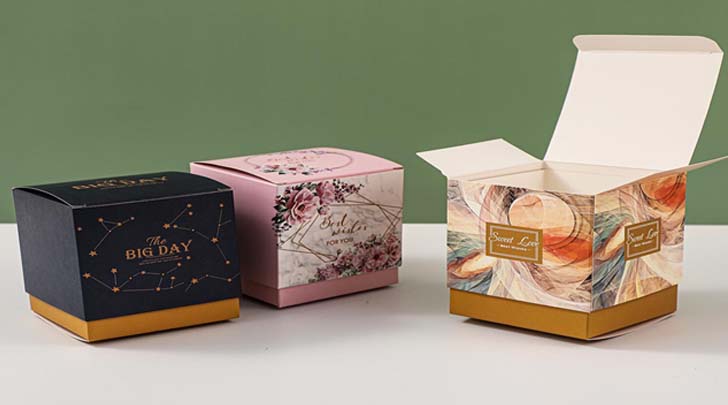
The Benefits of Luxury Packaging 

You’ve probably seen a lot of people moving towards luxury packaging. Why is that? Well, luxury packaging is high-end forms of packaging that are designed to showcase elegance, exclusivity, and highest quality of this.  In a lot of industries that utilize this, such as fashion, cosmetics and even accessories, this is something that stands out. You even see this in wines, confectionary items, and home items. 

Beyond just the functional benefits, it’s a premium experience that consumers will love, using different luxury items that showcase the design, and employs the highest quality finishes for a better opulence too. There are even customization options that you can do too. 

It does respect the identity of the brand, and the values too, while pushing for an emotional connection with your customers, so that this differentiates you from other competitors. 

What Packaging Engineers do for Luxury Packaging 

Luxury packaging and its services are made to integrate the innovation, functionality, and finally elements of sustainability. 

It’s a different approach, but it ensures that the items you have incorporated the aesthetics you want, while also protecting them every step of the way. 

Engineers in this realm are looking to create different designs that are robust structurally, using the highest of all high-quality sorts of materials, and also helps with manufacturing the right techniques too. 

From closures that are innovative to inserts that are intricate, these people know how to create the right items, to the point where every detail gets executed flawlessly, while also keeping the product’s integrity, and a great unboxing experience. 

They also will use better, more eco friendly approaches, in order to ensure that the packaging resource is optimized and has the ideal materials to create a sustainable solution that’ll shine. 

They work to make sure that you’re getting exactly what you want out of your packaging, no matter what. 

Luxury Packaging: A Real Art Form 

Yes, it’s more than just a pretty box. It’s in fact a place to tell stories and communicate with the brands. This design offers emotion, anticipation, and provides the brand identity and the values too. 

Packaging designers will get some luxury packaging, and understand the brand’s visionary aspects, the audience targeted, and the position of the market. It is leveraged in order to create the highest level designs that get the attention of customers and stand out amongst the other products of a similar nature. 

Utilizing the premium items, different textures, embellishments, and typography all contribute to a better and more extraordinary type of packaging experience. 

It combines functionality and art fusion, to the point where designers will put together different techniques, including debossing, embossing, stamping using foil, and spot varnishing, providing sophistication and elegance that can’t be contained. Ti’s an artistic element that makes the product great and provides a lasting impression that customers will remember. 

The thing with luxury packaging is that it will work, and it’s a synergy that designers and engineers utilize, creating some of the best solutions. 

Collaborating and innovating 

With luxury packaging, you get a collaboration that means it’s working harmoniously, so it’s appealing visually and structurally. 

It’s something that is great to create the most cohesive and effective final sort of product. 

Innovation also plays a huge role. With new materials to choose from, various techniques in manufacturing, and finishing to push these boundaries, it’s possible. The innovation drives this evolution of luxury packaging, so that brands will engage with this, and consumers will be able to get excited about some of the huge changes that happen as a result of these collaborations. 

All About Foil Stamping 

Foil stamping is something that’s great for making sure that your product stands out. It is a type of printing that uses a die that’s made of metal, pressure and het, and a foil film that helps enhance a product.  There are a lot of applications of foil stamping, which include: 

  • Labels 
  • Stationery 
  • Cards for the holiday 
  • Packaging of products 
  • Folders with pockets 
  • Seals, certificates 
  • Postcards 

These days, it’s got a more modernized name to it, known as hot stamping. This was first made in the 19th century.  These days, it’s leveraged to build a visual interest, and increase the perceived value that products have. 

Foil is a thinly coated type of item, which has colors that are put through this, and that’s with the hot stamping process.  You add the pigment to a film that’s clear, and then, that color, along with the design, is then translated to the product that’s there. 

Another layer of this foil also might have other pigmentation. Finally, you’ve got a third layer of adhesive that’s activated by heat, and it sticks directly onto the product as well.  Like spot UV and embossing, you can apply all kinds of stamping using foil to paper products. 

It works best with some stock to create an even, smooth surface, rather than one that’s lined up or textured in terms of materials. 

Types of Stamping 

Based on the type of substrate you’re going for, there are a few different types of foil stamping that you can use. 

They are: 

  • Flat foil: this is an economical, simple process that uses magnesium or copper stamps that transfer this directly to the substrate. It achieves this with a small raise of the surface that’s there 
  • Vertica: this causes the design to fit well on substrates that are flat, or cylindrical 
  • Sculpted: this uses a die that’s made of brass to create a more raised look on a defined or carved area that really stands out
  • Peripheral: this is foil heat that’s applied to the outer circumference or perimeter of this product 

Gold is usually what’s used, but silver is another, used to create a more luxurious look.  There are also matte, glossy, holographic, and metallic types of sparkles and different wood grains that can be added to this.

Foil Types used 

There are different variants of foils that are used to create a more distinctive look to the products and packaging, especially if it aligns with the brand image or the marketing campaign of choice. 

There is metallic foil which has an attractive sort of patina that goes all the way across. While gold is usually used with metallic, there is also silver, red, blue, copper, and even green types. 

Matte pigment is one that’s more muted in the way that it’s used, but the color depth is something that you certainly can enjoy. 

Glossy pigment is where you combine the high gloss with a more non-metallic type of finish, across many different color variants. 

Holographic is where you add hologram sorts of features for an eye-catching, futuristic sort of look to the item that’s there. 

Finally, there is the special effects foil that is used to create a variety of different textures that are there, including mimicking pearl, leather, and even marble 

In general, the right type of foil that’s used for each job is ultimately based on the type of substrate that you’re working with, and also the colors that come with this. If you’re looking to really create impactful results, use these today! 

Looking at the Overall Evolution of Packaging Materials 

These days, the sky’s the limit on packaging materials. You’ve got so many different kinds, and with new innovations on sustainability coming down the pipeline, there’s a lot for you to enjoy.

However, the evolution of these materials does require one to look back a little bit, and from there, see what was popular in the past. Knowing history is good, because it allows one to not make the same mistakes in the future. 

Here, we’ll outline the history of packaging, and the past, present, and future of these unique pieces. 

The Beginning 

In the beginning, there were more traditional materials used. Glass, paper, and metal were commonly used to transport stuff. 

We can even look back even further, where packaging was done in clay vessels that were heated, and then transported to others. Many times, the glass was used to carry these items. But then over time, as we developed new things, we also began to use paper products. 

With the advent of the first corrugated box, things changed. Boxes were made stronger and lighter, and lots of people began to see the developments in packaging that would come about. While the beginning was more basic with the types of ties that were used, it soon evolved into the unique types of packaging that we’ve seen today. 

Going Modern 

Going modern is a big part of this. These days, we see the use of plastics. 

While plastic is great, simply because it’s light and durable, it’s created problems because it’s not easy to break down. our oceans and forests suffer, and now people are chomping at the bit for sustainability.

That’s where composites come in. various items that are a mixture of different fibers have been developed. Initially, this was used because it was more sustainable. But nowadays, it’s also good because it creates lighter packaging. 

There are also bioplastics too. These are plastics made from natural materials and are biodegradable. They’re less harmful to the world around us and tend to be better for the planet. 

The future 

Right now, the future with packaging is mostly focused on making the packaging lighter, smaller, and eco friendly. The goal is to lessen one’s carbon footprint, while also focusing on the branding elements that come with this too. 

For instance, having various eco-friendly packaging is a good place to start.   Various mushroom and other vegetable packaging has become a very popular means to package items. There is also the push for more biodegradable items, and even reusing some of the popular items that are out there. 

The push for smart packaging is another big one. These days, it’s less about how big oak boxes you can use, and instead, aptly sizing this.   properly adapting your packaging to this is so important, because people are able to, through this, c rate packaging that’s easy on the environment, and easy on the wallet.   We have AI technology now that can properly adapt the packaging for one’s personal reasons and development. Through this, a lot of times people are able to create the ideal packaging for their products, regardless of the state of the environment. 

With so many different advances in packaging, it’s no wonder that people are focusing on this now. Doing so allows one to focus on building better materials. With a rich history, the world of packaging has come pretty far. We expect to see more unprecedented trends, and through this, people are able to build the best and most ideal luxury products that they can, no matter what it might be.